
Music, Hyperpop
Hyperpop: From Internet Experiment to the Language of Contemporary Pop
Hyperpop did not emerge overnight, nor was it initially conceived as a distinct genre. Its formation unfolded gradually through experiments in niche online communities, where artists were already working with pop music, electronic production aesthetics, and radical sound processing long before the term itself appeared. By the mid-2010s, SOPHIE, A.G. Cook, and artists associated with the PC Music label were creating music that moved beyond conventional pop formats while still retaining pop’s structural logic and emotional core.
Early experiments with sound
These experiments were, in many ways, ahead of their time. By blending pop with harsh electronic textures, industrial timbres, and extremely dense arrangements, artists arrived at a sound in which pop’s melodic vulnerability coexisted with sharpness, tension, and a sense of overload. “Pop tenderness” stood alongside distorted synthesizers, abrupt dynamic shifts, and thick, at times aggressive sound design. As a result, the emotions conveyed in these tracks felt more complex and layered: anxiety, the desire for transformation, and inner contradictions were expressed not only through lyrics, but through the very architecture of the sound itself.
SOPHIE’s influence on the genre
SOPHIE’s role in this context is especially illustrative. Her musical approach was closely tied to personal experience, questions of identity, and an interest in themes of corporeality, artificiality, and transformation. This was directly reflected in her sound—plastic, synthetic, yet emotionally charged. Early singles such as BIPP (2013) and LEMONADE attracted attention within experimental circles, but at the time this aesthetic remained widely misunderstood. For mainstream listeners it felt too unfamiliar, with fractured rhythms and unconventional structures that were often perceived as raw or unfinished.
It is particularly revealing how the influence of key figures developed within this history. In the 2010s, SOPHIE laid the groundwork for a new sonic logic, establishing the very possibility of treating pop as a plastic and radical material. Charli XCX, beginning with their collaboration during the Vroom Vroom era (2016), helped bring these ideas into a broader cultural space. Her album Brat (2024) became one of the most visible pop releases of recent years, demonstrating how hyperpop’s aesthetics and techniques could operate at a mass-audience level without losing their edge.
From underground to recognition
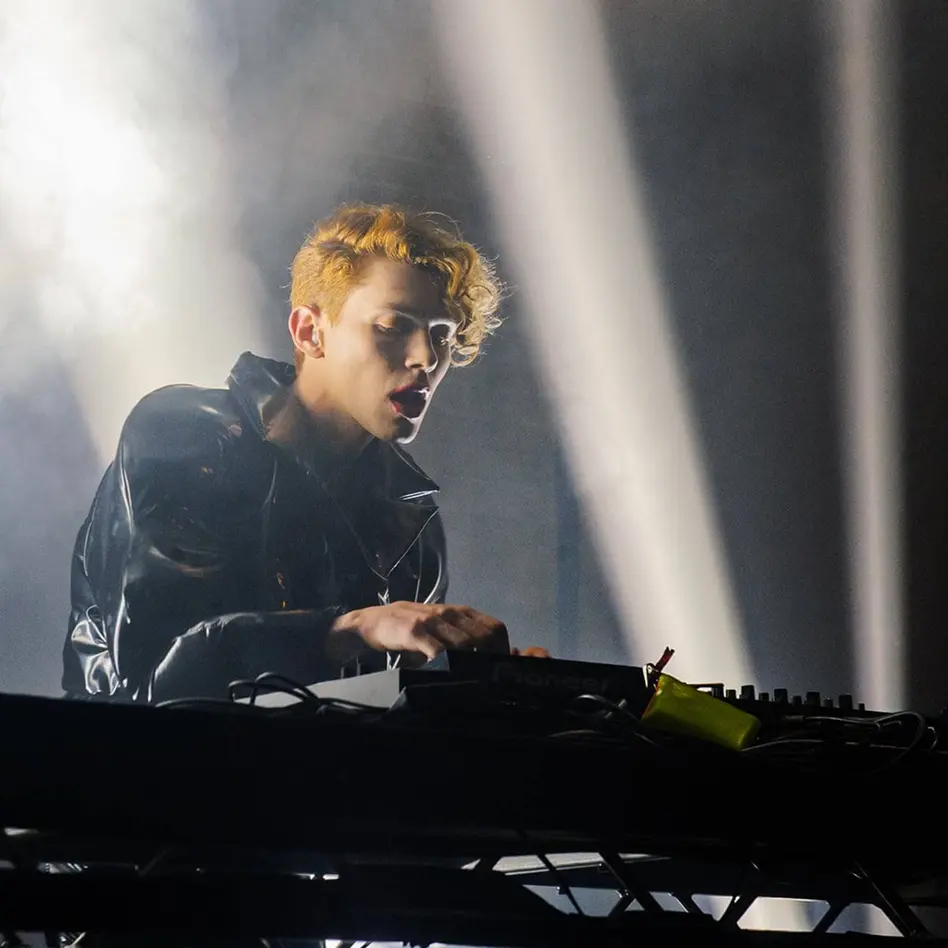
Wider recognition of the ideas pioneered by SOPHIE and PC Music only became evident several years later—closer to the late 2010s—when elements of this approach gradually began to enter the mainstream. What had once been perceived as a radical experiment slowly transformed into an expressive language the industry was finally ready to absorb.
The problem of defining the genre
At the same time, offering a strict definition of hyperpop remains difficult. For some, it is associated with ironic, noisy experimentation in the spirit of 100 gecs; for others, with the more melodic and emotionally oriented pop of Charli XCX; for still others, with SOPHIE’s avant-garde electronic music. This divergence stems from the absence of rigid boundaries: hyperpop readily absorbs elements of rap, EDM, glitch, emo, and other styles, remaining fluid and open-ended.
Text block is empty in the migrated content.
Internal directions
Within this field, two intersecting vectors can be identified. The first is more melodic and emotional, emphasizing pop structures, Auto-Tune as an expressive tool, and lyrics centered on inner experience. This category most often includes Charli XCX, A.G. Cook, Hannah Diamond, and some of SOPHIE’s later work. The second is more radical and chaotic, marked by aggressive sound design, heavy distortion, and elements of provocation; it is represented by 100 gecs, Dorian Electra, and artists in their orbit. These directions are not rigidly opposed but rather coexist within a shared aesthetic space.
Today, hyperpop should be seen not as the future of music, but as its present. It does not strive for universally comfortable or “correct” sound; instead, it centers on working with extremes, dense digital textures, and emotional intensity.
Visual aesthetics
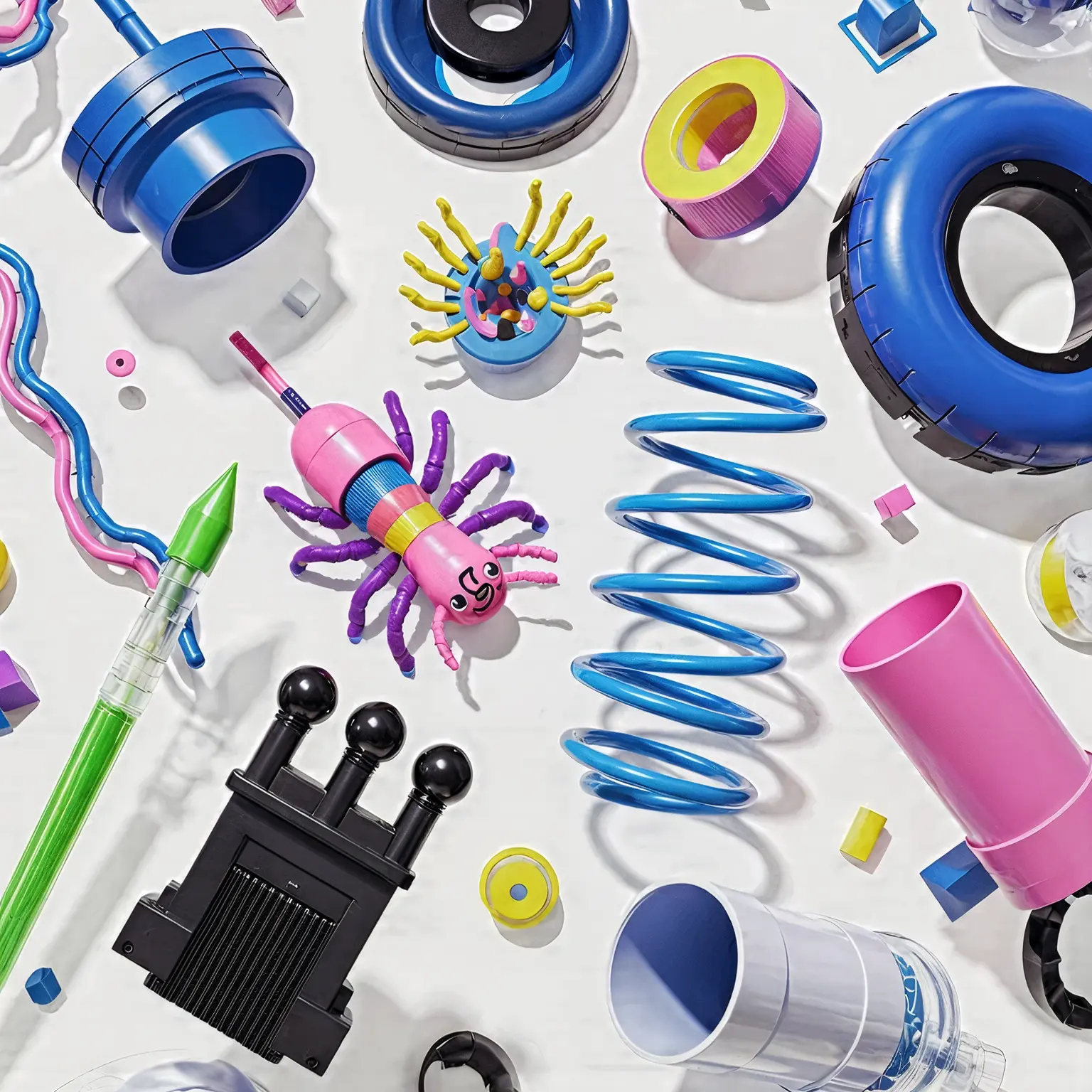
The visual dimension plays an equally important role. Hyperpop aesthetics are characterized by acid colors, holographic and plastic effects, the combination of glamour with deliberate artificiality, and naive pop imagery juxtaposed with destabilizing details—such as distorted bodies, digital masks, and intentionally “cheap” 3D graphics. Together, these elements form a visual language that complements hyperpop’s multilayered sonic world.
Hyperpop outside genre hierarchies
It is unlikely to become a dominant genre in the traditional sense. Rather, it has already evolved into a set of techniques and artistic approaches that are gradually seeping into pop, rap, and electronic music. It is a flexible language that artists employ in different ways, adapting it to their own aims and contexts.
Hyperpop today
Hyperpop is difficult to treat as a unified, fully formed genre. Instead, it is better understood as a constellation of aesthetic choices and artistic strategies that emerged from internet-based experimentation and gradually reshaped contemporary pop music. The work of SOPHIE, PC Music, and associated artists expanded the very idea of what pop sound and pop visual identity could be.
Today, elements of hyperpop appear in a wide range of contexts—from the underground to the mainstream. Its influence is evident even where the term itself is no longer explicitly used. In this sense, hyperpop matters less as a discrete movement than as a language through which the forms and boundaries of modern pop music are being reimagined.