
Concert, Festival
Drake Very Owned Wireless 2025
ChatGPT сказал:
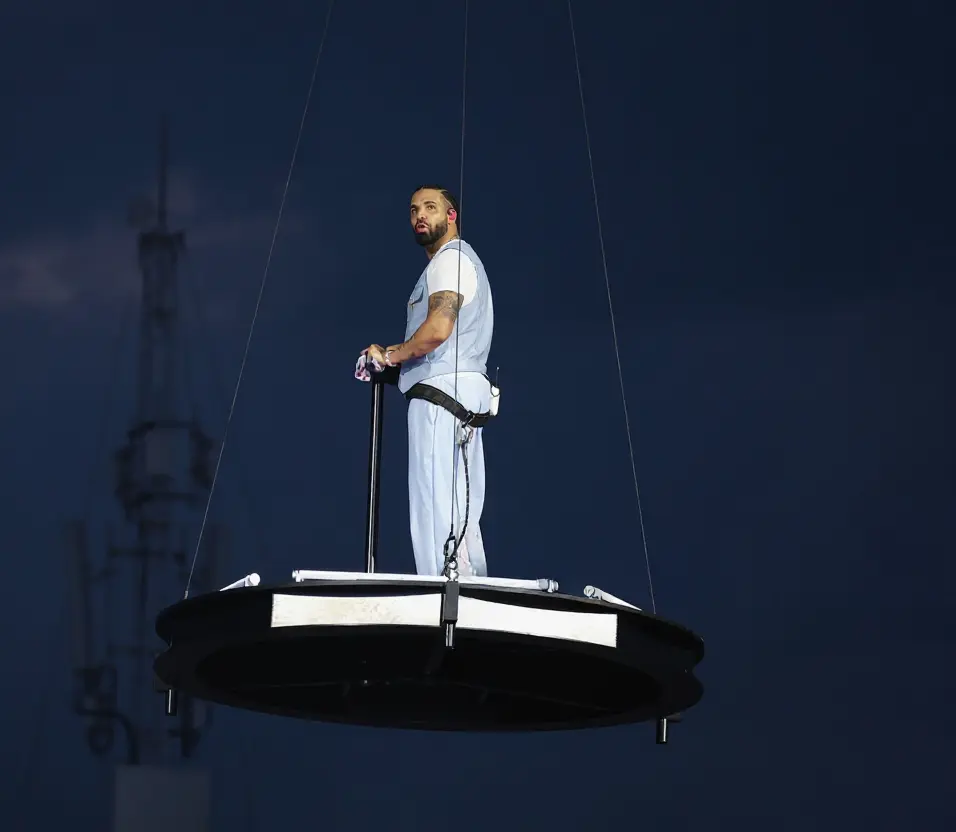
In July 2025, Drake made history at London’s Wireless Festival by becoming the first artist ever to headline three nights in a row. But he didn’t just perform — he crafted a conceptual trilogy. The first night was all about emotion. The second, about power. The third was meant to be the grand finale. It wasn’t.
Why the ambitious idea fell short — let’s break it down.
Act One: The Vulnerable Voice of a Generation
On Friday night, the stage at Finsbury Park felt quieter than usual. Drake, as if shedding the armor of a pop superstar, stepped into a soft glow and opened with the songs where he’s always been most honest: Marvin’s Room, Jaded, Shot for Me. This was the Drake from the era when every track felt like a 2 a.m. text to an ex.
The atmosphere was dialed in precisely: intimate, emotional, tinged with nostalgia for the time when R&B; spoke for a whole generation. The songs flowed with no theatrics, but with clear dramatic arc. The crowd didn’t jump — it listened.
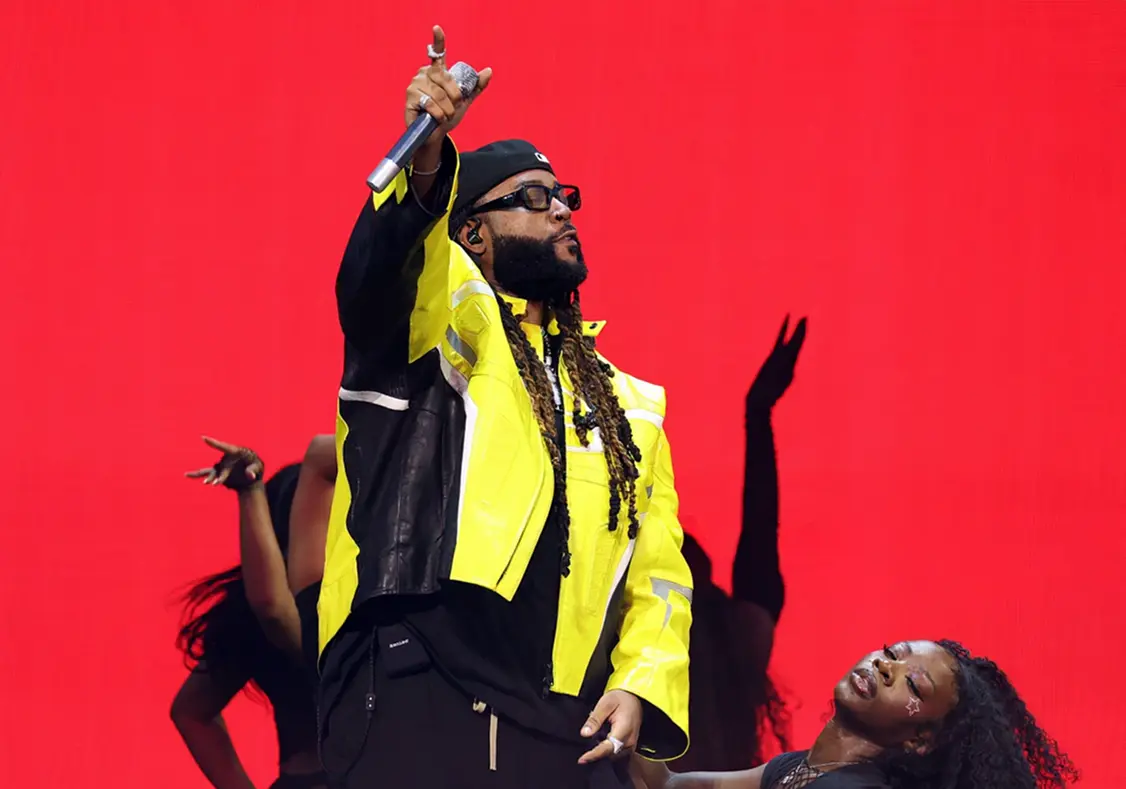
Joining him onstage were artists whose names have long been synonymous with warm, slightly vintage R&B;: Giveon, Bryson Tiller, PARTYNEXTDOOR, Mario, Bobby Valentino.
The defining moment came when Lauryn Hill appeared for a mashup of her Ex-Factor and Drake’s Nice For What. Two eras intertwined — and for a moment, the stage felt like a confessional.
Was it perfect? No. At times, the pacing faltered and the energy dipped. But the concept — vulnerability as a form of leadership — held firm. This was Drake the romantic. Drake unafraid to be soft.
Act Two: Flex as Armor
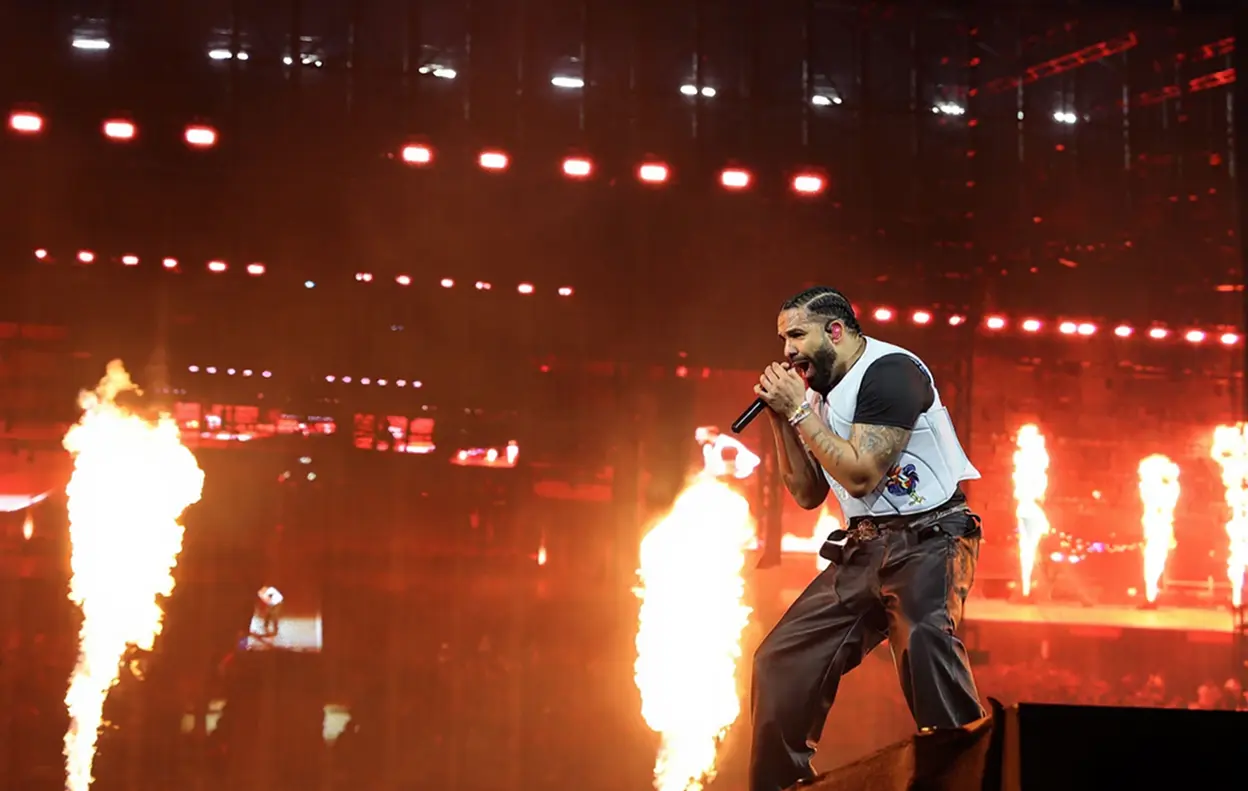
If Friday was all Anita Max Wynn vibes, then Saturday was straight flex. The second night stood as a deliberate counterpoint to the first — no softness, no heartache. Just groove, bravado, and a predator’s stare into the lens.
It opened with IDGAF, and from that moment on, Drake had the crowd in a chokehold. This was his ultimate rap statement — about himself, his stance, his (in)vulnerability. He boasted, snapped, flirted with provocation.
Chants of “Fuck Kendrick” echoed from the crowd — he echoed them back. On Nonstop, he flipped lines to throw shade at LeBron. Later, interviews would call it “too much.” But in the moment, it felt like the rawest, realest expression of any artist at the festival.
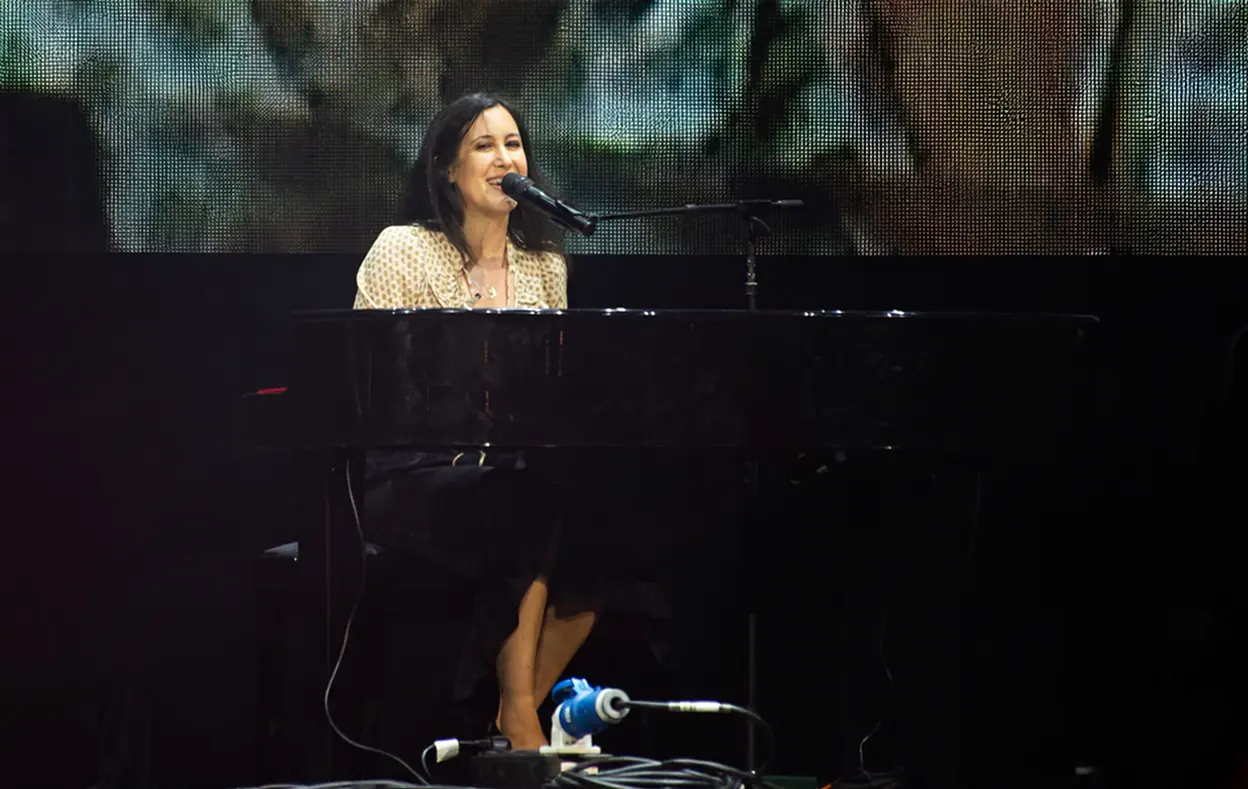
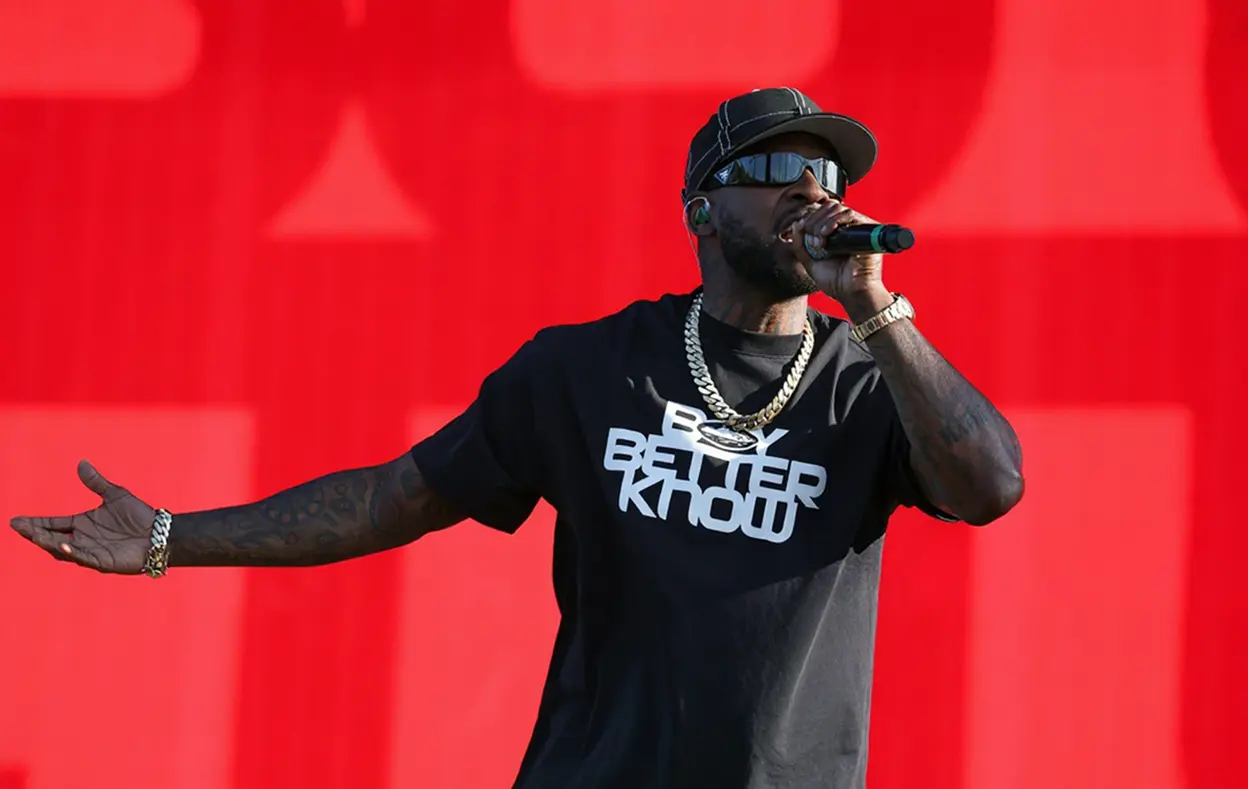
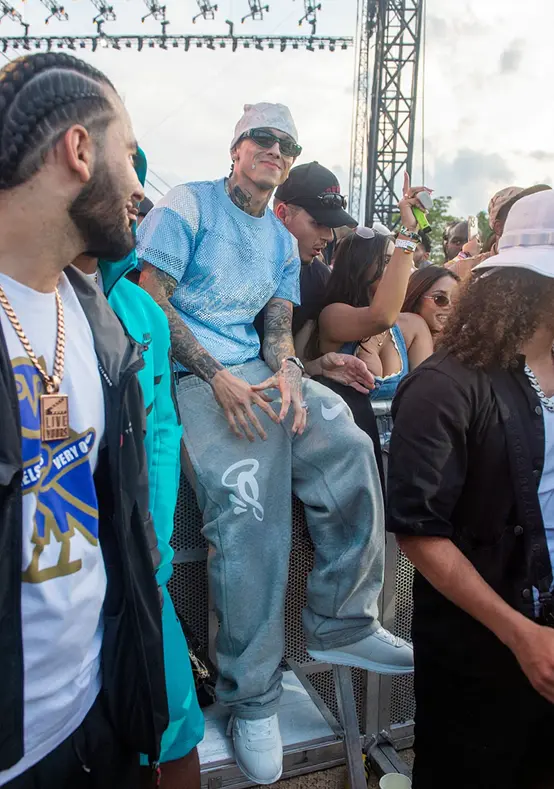
London’s street scene showed up in full force: Skepta, Dave, J Hus, Central Cee, Headie One, Yeat, 21 Savage, Sexyy Red, Latto — and yes, even Vanessa Carlton (!).
That moment when Drake performed A Thousand Miles with Carlton herself became an ironic, borderline surreal break in an otherwise tense, heavy set.
Something was always happening onstage — surprise guests, sudden beat switches, bursts of chaos. At times, it felt more like a street-level power display than a scheduled performance.
This was Drake trying to be the loudest voice in a city already overflowing with loud voices.
Text block is empty in the migrated content.
Act Three: A Global Vision That Fell Apart
The third night was meant to be a cultural bridge — Afrobeats, Caribbean rhythms, dancehall. Music that pointed back to roots and forward to the global sound of the future. On paper, it looked powerful. The lineup promised Burna Boy, Rema, Popcaan, Vybz Kartel. The finale of Drake’s three-part saga was set to become a celebration.
But it didn’t turn out that way.
First, the night was abruptly cut short — Drake’s set lasted just 40–45 minutes. Officially, it was due to London’s strict curfew. But fans weren’t buying it. Those who came only for Sunday were visibly angry. There was no climax — the show just... stopped.
Second, there was no rhythm. While the first two nights had clear narratives — one romantic, the other aggressive — this one fell into disjointed fragments. Afrobeats gave way to hip-hop, then reggae, then — out of nowhere — a slow cover of I Will Always Love You.
None of it came together into a cohesive story. It felt like even Drake wasn’t quite sure who he was supposed to be that night: a curator? a guest? a party host?
Even the high-profile guests felt detached — not part of a shared arc, just “invited.” Some popped in for a track or two, others barely made an appearance.
The audience was left wondering: was this still a show — or had it slipped into a chaotic jam session?
How It Ended
Three nights — three different Drakes. Vulnerable, predatory, synthetic. He wanted to be everything at once: the voice of emotion, the voice of the streets, and a bridge across global cultures. Sometimes it worked. Sometimes it didn’t.
But the most important thing? He tried. He didn’t just come to sing the hits and leave. He built a structure, offered three distinct versions of himself, and let the audience decide which one felt real.
Wireless 2025 wasn’t about music — it was about an artist trying to make sense of his place in a world where genres no longer hold, reputation is fragile, and attention is fleeting.
Drake played by his own rules. And even if the final note rang false, the whole symphony was still greater than the sum of its chords.